
THE ORIGINS OF TERRAZZO / GRANITO
An enigmatic term, Italian consonances, and a rich history. A closer look at terrazzo, a material that generates much discussion.
What is terrazzo?
Shiro Kuramata, a Japanese designer, made terrazzo his signature and poetically named it "the debris of our memories." He was referring to the multitude of materials reduced to fragments and splinters to adorn terrazzo.
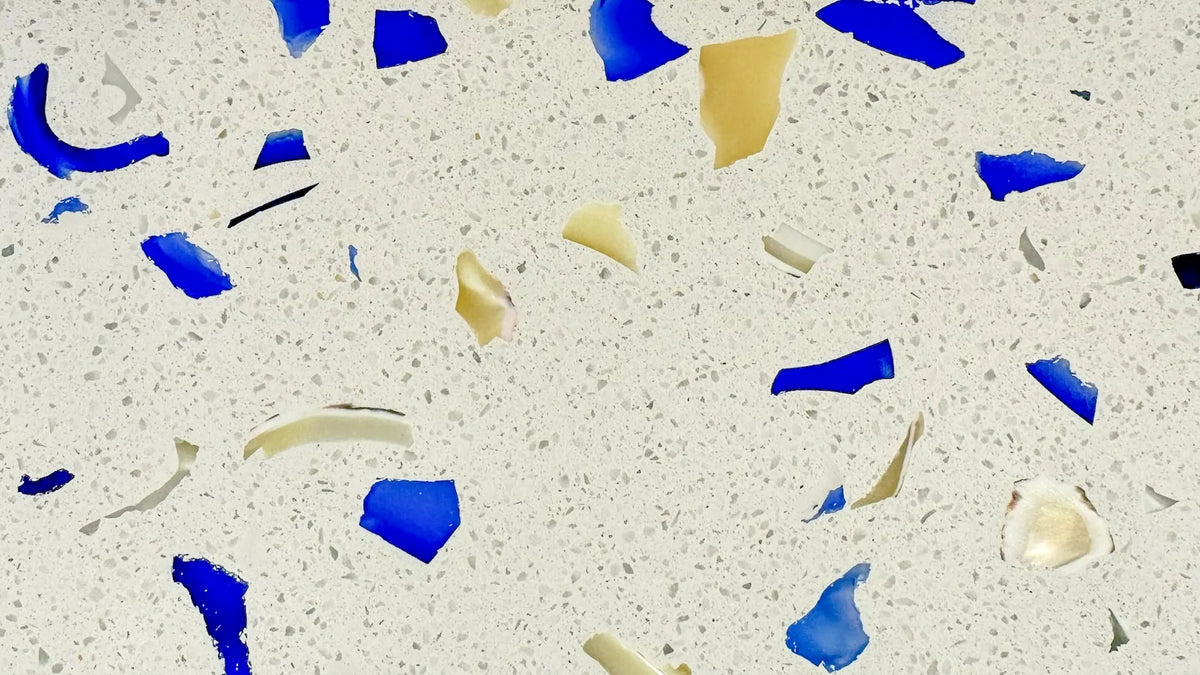
Nacreous shells, Murano glass, slate fragments, precious stones, and multicolored marble chips joyfully pepper terrazzo compositions.
Terrazzo, also known as Granito,
- Ode to Venice
The City of Doges consecrated the aesthetic culmination of the exceptional craftsmanship that is terrazzo.
In the 15th century, terrazzo appeared to Venetian artisans as a substitute for traditional mosaic.
In the 13th century, terrazzo experienced its heyday. It adorned Venetian palaces...
The Doge's Palace as well as the Palazzo Grassi and Rezzonico are Venice's architectural masterpieces and have the particularity of featuring floors clad in terrazzo that has triumphed over time (in terms of duration as well as climate). For over 800 years, these buildings have been the spokesmen for sumptuous terrazzo.
How did this aspect of Granito appear?
For less fortunate households, Italian artisans created exterior floors with a real concern for economy. Thus, passageways were paved with a mixture of earth and broken materials (crushed bricks...) which were rammed and beaten.
It is said that over time, the circulation of people on these makeshift floors led to erosion (which can be compared to natural sanding) and at the same time revealed a smooth surface with interesting aesthetic characteristics.
It is for this reason that the term terrazzo originally means embankment or terrace. These terms reflect the initial use of terrazzo. It was primarily an earthmoving operation with earth as the raw material and with the ultimate goal of creating a floor particularly suitable for terraces.
The addition of aggregates/marble chips was the next step in the creation of this expertise. These chips and fragments of marble brought a brilliance to the initial mixture that created the legend of this coating, now known as terrazzo.
In the Middle Ages, a period during which Venice was one of the main commercial powers in the West, the expertise related to terrazzo evolved in terms of the fineness of the aggregates used in the designs.
Indeed, the exploitation of marble quarries in the Verona region was driven by growing architectural needs. This allowed artisans to develop their expertise, cultivate exceptional know-how, and refine this unique aesthetic specific to terrazzo.
If we look at the components used, it is possible to identify the binder, which was the result of a mixture of crushed terracotta and hydraulic lime with insulating and decorative qualities. The marble aggregates were scattered and vigorously mixed into this mortar.
The artisan's preferred tool for uniformly sanding the composition was known as the "orso." This manual sander consisted of a stone grinding wheel, attached to a horizontal axis (most often a wooden handle).
This technical device allowed artisans to erode and polish the surface covered with the granito mixture. The sanded surface was then covered with linseed oil, known for its nourishing properties, to ensure its protection and durability over the centuries. Linseed oil was used because it protected the surfaces while preserving the shine and brilliance that made terrazzo famous.
History of terrazzo
- The 1920s: terrazzo in the spotlight
The Art Deco movement established terrazzo as a must-have. Its exciting colors and the plurality of materials that compose it contributed to its flourishing in this artistic current.
After this period of glory, it became "kitsch" and fell into oblivion with the emergence of new trends.
- The Eighties:
Terrazzo rose from its ashes with the Memphis Movement, an Italian architecture and design current initiated in 1980 in Milan by Ettore Sottsass, the famous Italian architect.
Terrazzo joined the Memphis movement in its aspiration for freedom and a deep attachment to a kind of medley of aesthetics, styles, and materials. Terrazzo is above all an explosion of colors freely disseminated throughout the composition.
Art pieces emerged from this encounter between the Memphis movement and terrazzo.
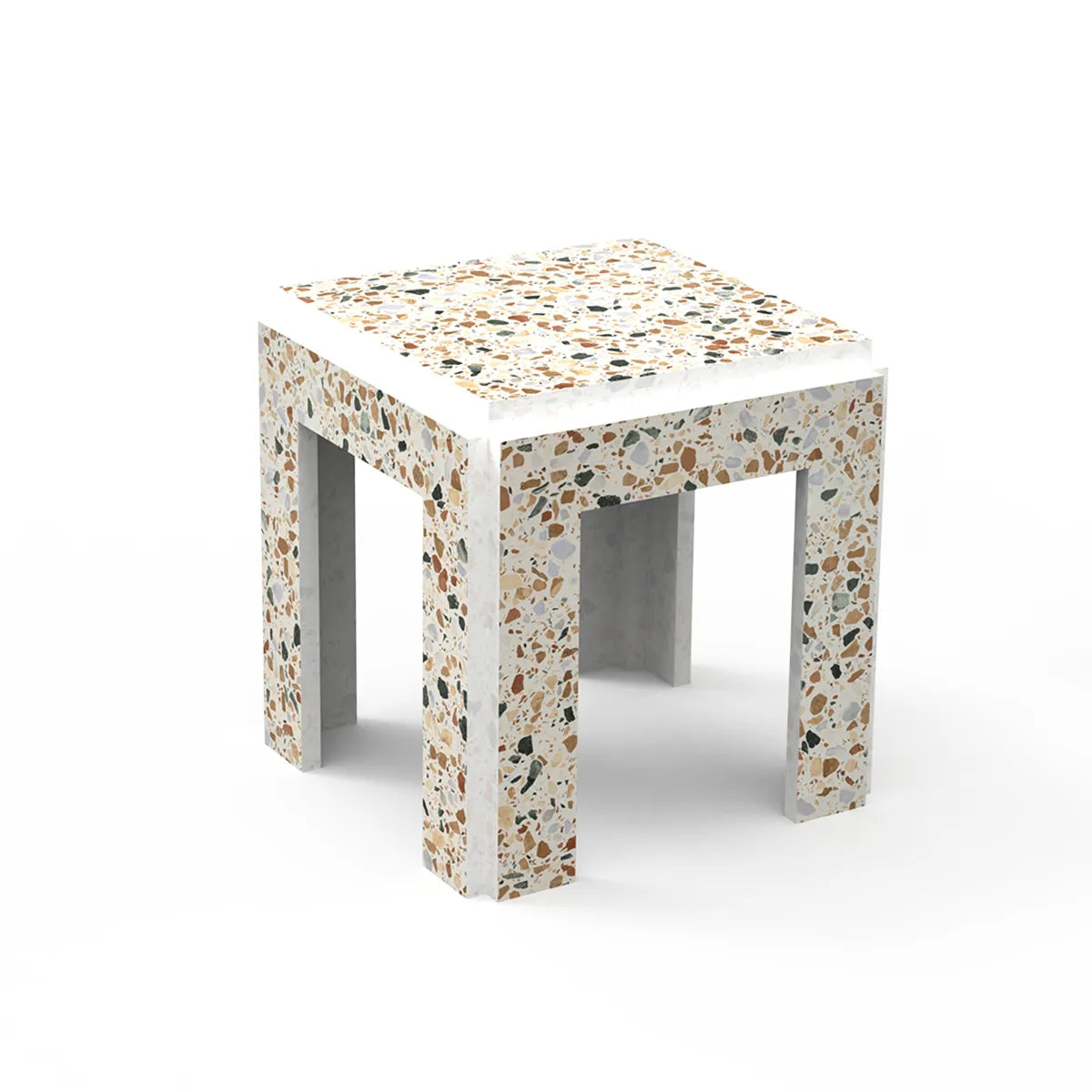
- The Kyoto side table (1983), Memphis Milano edition by Shiro Kuramata (1934-1991), Japanese designer.
A work crafted with hybrid terrazzo, "Star Piece," and a definite love for color.

-The Casablanca Bookcase (1981), by Ettore Sottsass (1917-2007), one of the iconic figures of the Memphis movement.
A flashy speckled totem, the famous "bacterio" pattern, a unique graphic design and a reference to Bob Dylan's famous song "stuck inside of mobile with the memphis blues again."
ml^ko
2013: The Terrazzo Project
2013 was a pivotal date for terrazzo as it was the main protagonist of a unique collection exhibited at the Tools Galerie (Paris).
Initiated by two Canadian designers, Philippe-Albert Lefebvre and Stéphane Halmaï-Voisard, the terrazzo project highlights terrazzo applied to furniture.
This project introduced transparency in terrazzo for living room tables, lighting, and other everyday items. The two designers gave a modern resonance to an ancient craft by achieving technical prowess in terms of lightening terrazzo, molding the material, and 3D cutting. Murano glass and Carrara marble are featured in modern terrazzo.
Le Jardin des Matières' vision of Terrazzo
For Le Jardin des Matières, terrazzo is a universe in itself, where the authenticity of the material and endless compositional possibilities are found.
Le Jardin des Matières aims to preserve unique craftsmanship with a rich history and technique, while giving it an avant-garde, innovative resonance.
This is rooted in the creation of original, custom compositions, accompanied by a unique sensory experience.